Yesterday Apple dropped a rather unexpected announcement – John Giannandrea, the head of Apple’s AI efforts, decided to step away from his role and plans to retire in the spring of 2026. For anyone who follows the company a little deeper than the new iPhone every September crowd, this news lands with real weight.
As loyal fans of Apple and of nearly everything the company creates (well, everything except those experimental accessories that sometimes feel like knitted socks), we cannot ignore this moment.
Who John Giannandrea Is and What He Actually Did at Apple
John Giannandrea entered Apple in 2018, and his arrival looked like a real power move. He took over a critical set of responsibilities. Tim Cook placed him in charge of all machine learning and AI strategy and he reported directly to the CEO. Under his leadership, Apple expanded its AI team, built its internal foundation models, created systems for on-device speech recognition, designed improvements for photo analysis, tightened the integration of Core ML across Apple platforms and helped move Apple toward a more unified Apple Intelligence direction. His group also supervised Search and Knowledge systems (the internal engines that power Spotlight, Siri answers, suggestions and content understanding across Apple devices).
But the role did not come with an easy path. Siri already sat in a weak position. Apple fans joked that Siri “wins the award for Most Confused Assistant,” and competitors like Google Assistant and Alexa moved ahead with faster progress. Giannandrea’s mission aimed at reversing that trend. He pushed the creation of Apple’s first real foundation model, he supported the App Intents system for deeper app actions, and he set the stage for the new contextual Siri that Apple promised at WWDC 2024.

However, the biggest moment of failure also arrived here. Apple promised a huge Siri overhaul (more personal context, smarter app actions, on-screen awareness, and deeper reasoning). Apple even marketed these features during the iPhone 16 cycle and told users to expect a real breakthrough. But by early 2025 the truth surfaced and the new Siri did not meet Apple’s internal reliability standards. The features looked unstable, unpredictable and too fragile for release. Apple delayed everything until 2026.
This situation placed massive pressure on the AI division. As a result, Apple reassigned Siri to Mike Rockwell, the executive who previously directed the Vision Pro team, and shifted Giannandrea toward research-only duties. Once that change happened, the countdown toward his retirement effectively started. So, the reason for his departure almost certainly connects to the failed Siri overhaul that Apple previewed, hyped and then postponed. Apple rarely forgives this type of misfire, especially when it concerns a flagship technology that defines the future of the platform.
What Comes with Apple AI After the Shake-Up?
Apple never leaves a leadership gap open for long, especially inside a division that defines the company’s future. After Giannandrea stepped aside, Apple appointed Amar Subramanya as the new head of AI.
The shift inside Siri’s leadership does not signal a slowdown for Apple’s AI plans. Apple now treats AI as a core part of every product it releases. The latest iPhones already show this direction: Live Voicemail, neural autocorrect, real-time FaceTime translation, Genmoji, and smarter photo analysis all run on models that Apple built internally. Vision Pro relies on AI for hand and eye control. Apple Watch identifies patterns in health data with dedicated neural hardware. All these features support Apple’s broader idea of Apple Intelligence, and the new leadership intends to push this idea into the ecosystem.
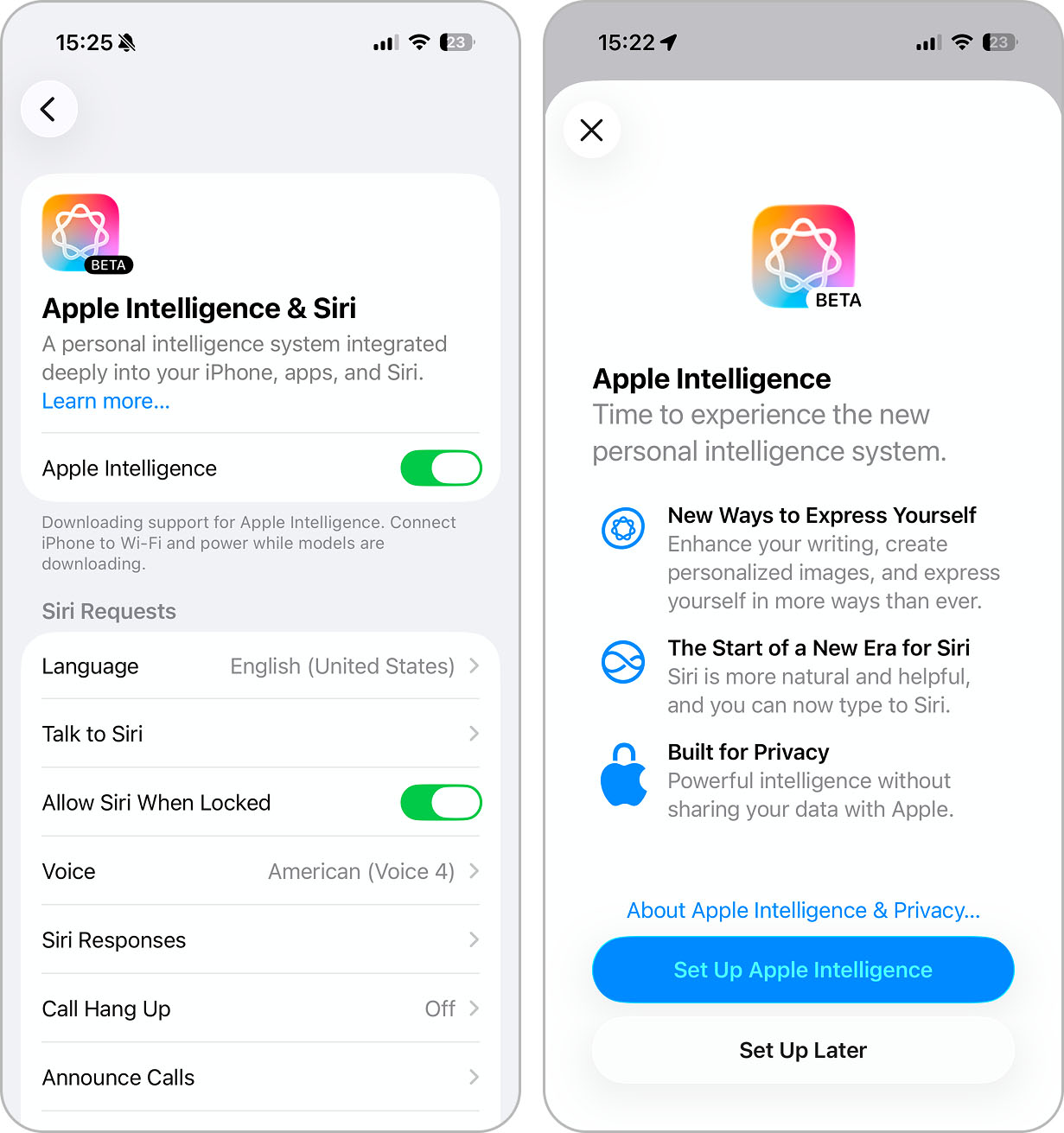
A major item on the roadmap remains obvious: Apple wants to deliver the delayed Siri upgrade. If the company keeps its plan, users may finally see these features in 2026. Subramanya’s arrival also hints at a stronger focus on large foundation models that could boost Mail’s sorting, Messages’ predictions, accessibility features and knowledge extraction from photos or screenshots. Apple also does not refuse its privacy-first philosophy. The company still favors on-device processing, encrypted data paths and the Private Cloud Compute system that limits server exposure.
Final Thoughts
Apple continues to move forward at its own pace. The company never rushes (almost), never panics and never throws dramatic statements across the stage. The departure of John Giannandrea fits this pattern. We cannot say he caused Siri’s troubles, and we cannot say Siri would collapse without him. Both extremes look too simple for a company that hides nine layers of complexity behind every decision. His contribution remains visible and his exit looks more like a normal change inside Apple’s leadership cycle than a disaster. No one stays in a role forever. Rumors even claim that Tim Cook may step aside, so nothing looks shocking anymore.
We do not treat AI as the heart of the Apple experience, so the devices already feel fast, smooth, and comfortable for us. Still, curiosity pushes us to observe the situation. Apple prepares a new chapter, a new AI chief takes control and Siri stands at the edge of another attempt to grow up. In short, everything stays fine.